From neural solvers to a contested Millennium Prize claim: how AI is taking on the Navier-Stokes equations
Machine learning has spent years speeding up approximate solutions to the equations that govern fluid flow. In 2026 it reached the underlying math: OpenAI says one of its systems settled the Navier-Stokes Millennium Prize problem, and the Clay Mathematics Institute says its review will be "deliberately unhurried."
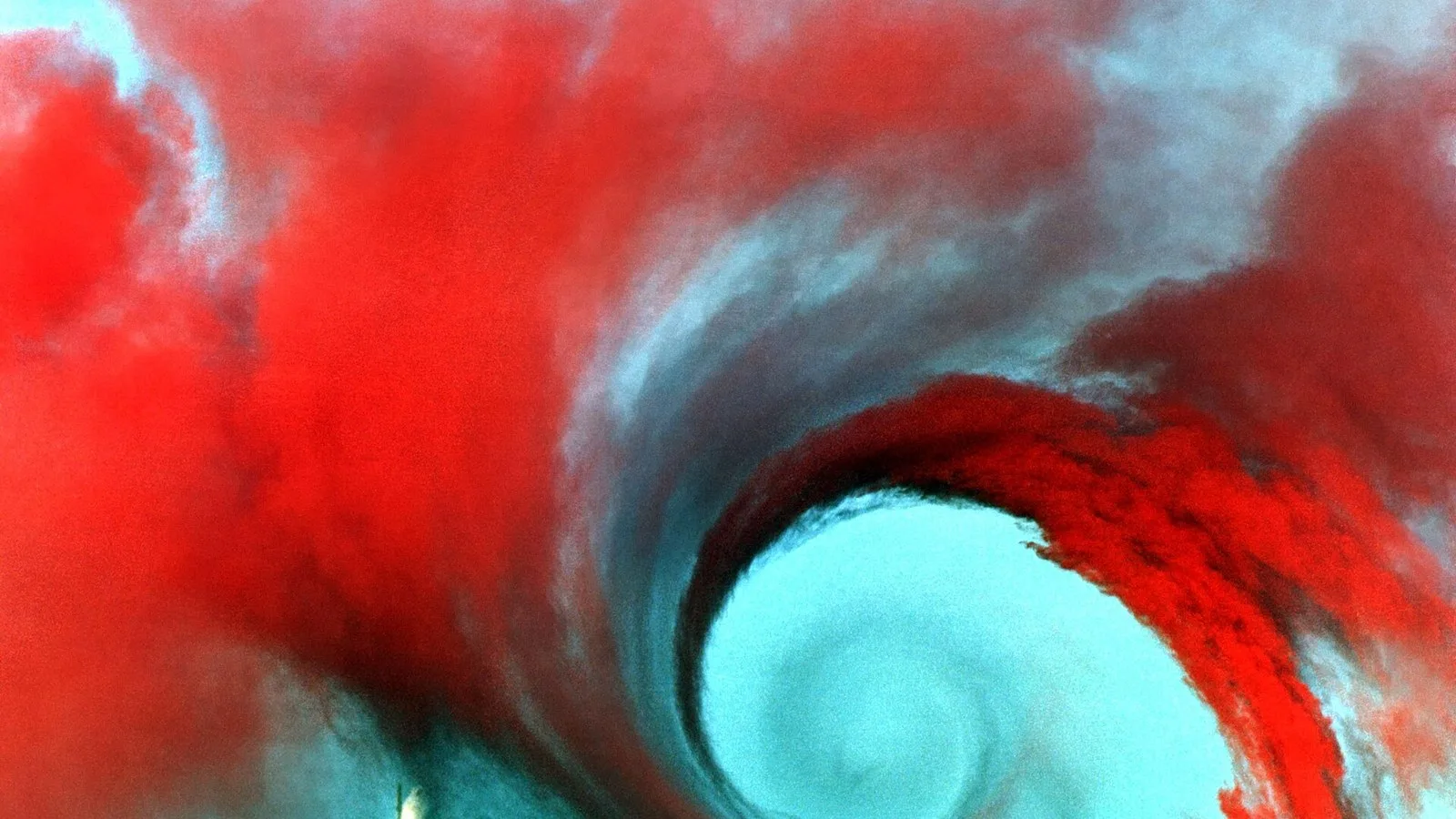
Photo: NASA Langley Research Center (public domain)
The Navier-Stokes equations describe how liquids and gases move, and they underpin simulations of weather, aircraft, engines and blood flow. Solving them at full resolution is extremely costly, and whether smooth solutions always exist in three dimensions is one of the Clay Mathematics Institute's Millennium Prize Problems, each carrying a $1 million prize (Clay Mathematics Institute).
Physics-informed neural networks
One widely used approach is the physics-informed neural network, or PINN, introduced by Maziar Raissi, Paris Perdikaris and George Em Karniadakis in the Journal of Computational Physics in 2019. A PINN is trained to satisfy the governing equations directly, rather than learning only from data, and can be used for both forward and inverse problems involving nonlinear partial differential equations (Raissi et al., JCP).
Neural operators
In 2020, a Caltech-led team including Zongyi Li, Nikola Kovachki, Kamyar Azizzadenesheli, Andrew Stuart and Anima Anandkumar introduced the Fourier neural operator, which learns a mapping for a whole family of equations instead of solving one case at a time. The authors reported it was the first machine-learning method to model turbulent flows with zero-shot super-resolution and "up to three orders of magnitude faster" than traditional solvers. On a 256×256 Navier-Stokes test, they reported an inference time of 0.005 seconds versus 2.2 seconds for a pseudo-spectral solver (Li et al., arXiv).
Google's learned fluid solvers
Google Research scientists including Dmitrii Kochkov, Michael Brenner and Stephan Hoyer embedded neural networks inside a conventional fluid solver for 2D turbulence. They reported results as accurate as baseline solvers with 8 to 10 times finer resolution in each dimension, giving 40- to 80-fold computational speedups, and said the method generalized to forcing functions and Reynolds numbers outside its training data (Kochkov et al., arXiv/PNAS).
Hunting singularities
In September 2025, Google DeepMind and collaborators from Brown University, New York University and Stanford University published "Discovery of Unstable Singularities," which reported the first systematic discovery of new families of unstable blow-up solutions in three fluid equations: the incompressible porous media equation, the 2D Boussinesq equation and the 3D Euler equation with a boundary. The team combined PINNs with a high-precision Gauss-Newton optimizer and reported near double-float machine precision for some solutions, accurate enough for computer-assisted proofs (arXiv; Google DeepMind).
DeepMind noted that mathematicians believe no stable singularities exist for the boundary-free 3D Euler and Navier-Stokes equations, which is why unstable ones matter for the Millennium Problem (Google DeepMind). Physics World reported that NYU mathematician Tristan Buckmaster and Stanford geophysicist Ching-Yao Lai were among the researchers whose earlier PINN work led to the study (Physics World).
The 2026 Millennium Prize claim
On September 8, 2026, OpenAI announced that an internal system had produced a proof that a smooth fluid starting at rest can develop a singularity in finite time under a smooth applied force while its energy stays finite. OpenAI said this establishes statements "C" and "D" of the official Millennium Prize formulation, and it published a written proof alongside a formalization in the Lean proof assistant (OpenAI). The paper does not claim blowup for the unforced equations (OpenAI paper via alphaXiv).
Nature reported that OpenAI said its model put about 10,000 AI agents on the full problem. It also reported that on the same day, Anandkumar and collaborators released a result on the zero-viscosity (Euler) problem obtained with a physics-informed neural network (Nature).
On September 11, the Clay Mathematics Institute said the problem "has apparently been settled" but added that its process for evaluating results and assigning credit "is deliberately unhurried." It has not announced an award (Clay Mathematics Institute).
Scrutiny has followed. New Scientist reported on October 8 that Anders Hansen of the University of Cambridge and colleagues found OpenAI's Lean code does not exactly match the written proof. Hansen said, "We are not saying that the natural-language proof is wrong. Nor do we say that it is correct." OpenAI told New Scientist it is aware of the mismatch and that this does not make either proof invalid (New Scientist).
Real-world uses
Machine learning for fluid problems is already in operational weather forecasting. Google DeepMind's GraphCast is a machine-learning global weather model described in Science in 2023 (Science). ECMWF has run its AI-based AIFS forecasting system operationally since February 2025 (ECMWF). In engineering, the Fourier neural operator authors pointed to airfoil design, where thousands of simulations may be needed, as a case where faster solvers make problems feasible (Li et al., arXiv).
Sources (13)
- Clay Mathematics Institute — Navier-Stokes Announcement, Sep 11, 2026
- Raissi, Perdikaris & Karniadakis — Physics-informed neural networks, Journal of Computational Physics (2019)
- Li et al. — Fourier Neural Operator for Parametric Partial Differential Equations (arXiv:2010.08895)
- Kochkov et al. — Machine learning accelerated computational fluid dynamics (arXiv:2102.01010)
- Wang et al. — Discovery of Unstable Singularities (arXiv:2509.14185)
- Google DeepMind — Discovering new solutions to century-old problems in fluid dynamics, Sep 18, 2025
- Physics World — Neural networks discover unstable singularities in fluid systems
- OpenAI — On the Navier–Stokes Millennium Prize Problem, Sep 8, 2026
- OpenAI — Finite Time Blowup for Navier–Stokes (alphaXiv)
- Nature — OpenAI claims huge maths breakthrough on a famed 'Millennium Problem'
- New Scientist — OpenAI mistranslated mathematics into code for its Navier-Stokes proof, Oct 8, 2026
- Lam et al. — Learning skillful medium-range global weather forecasting (GraphCast), Science (2023)
- ECMWF — AIFS Machine Learning data